Las Vegas Events · 4 min read
What Types of Tasks Can I Assign a Rental Robot?
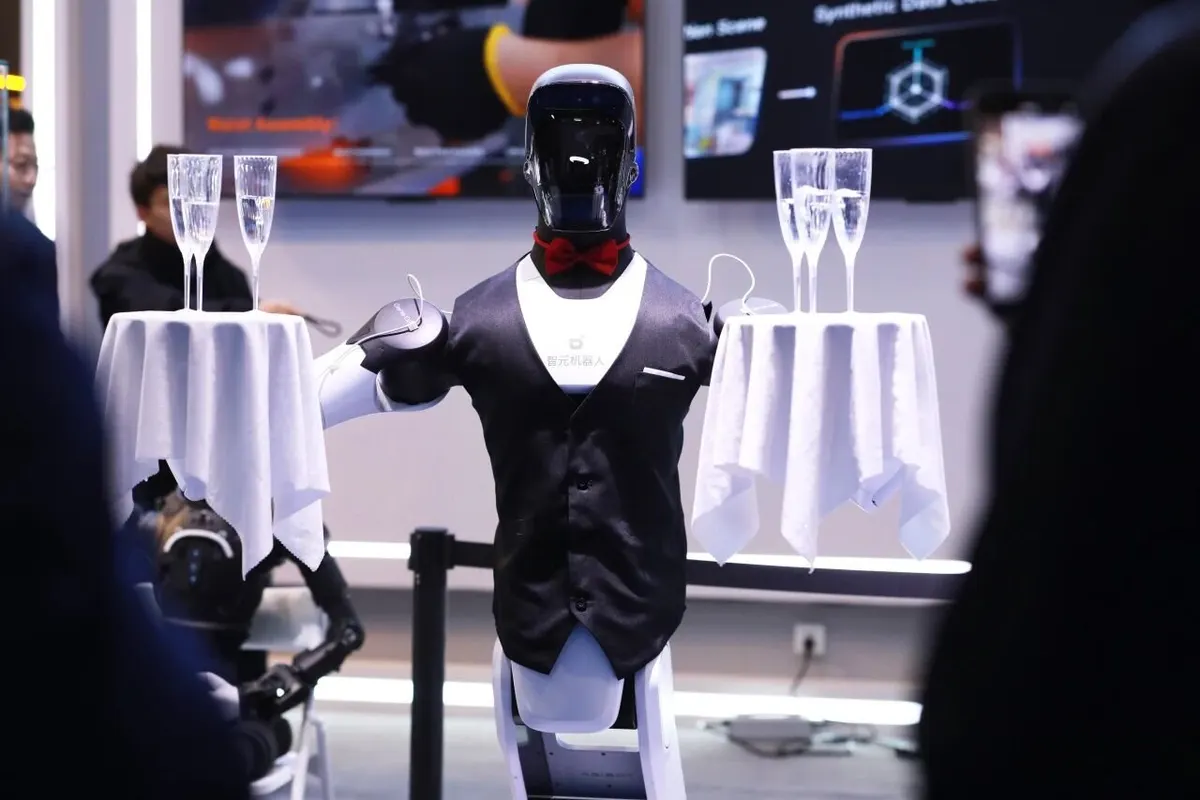
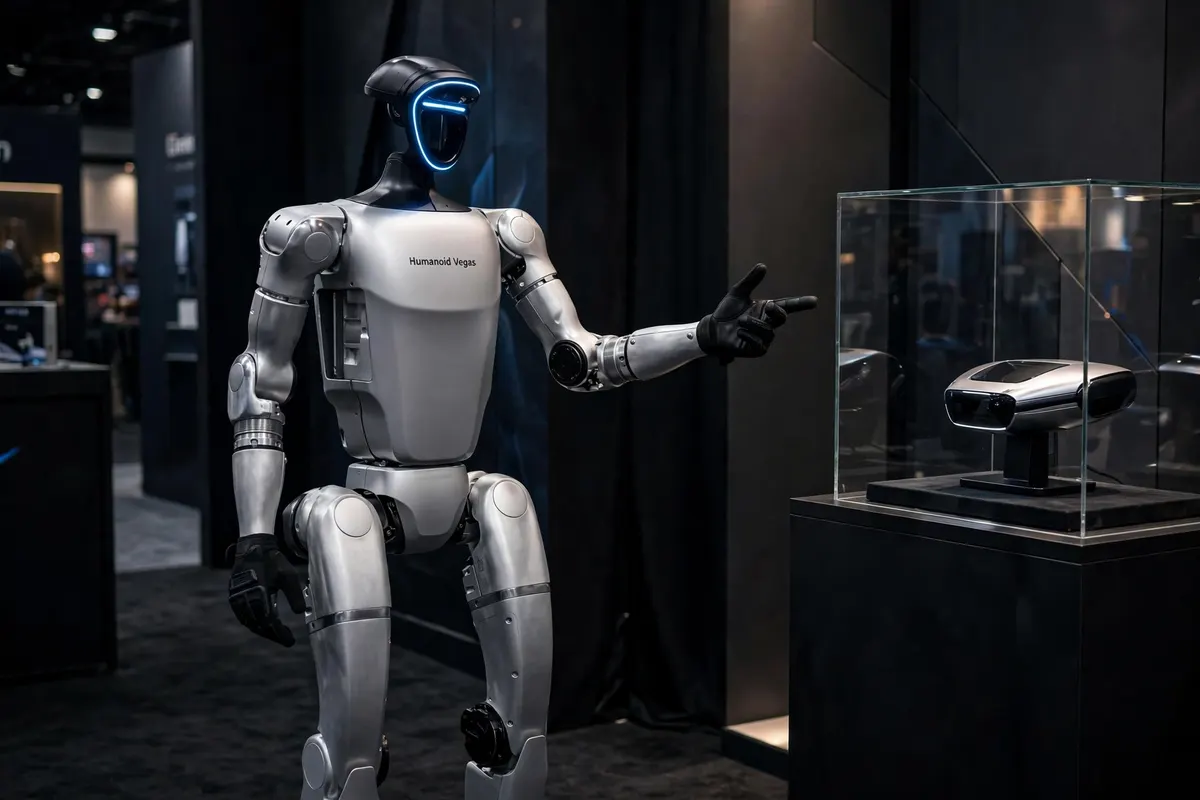
You can assign greeting and booth draw, demos and walkthroughs, walkarounds, guided moments, and content routines. I run Humanoid Vegas, a Las Vegas B2B humanoid robot rental company, and every booking includes trained operators who run the robot. What doesn't belong on the list: anything needing judgment, unpredictable questions, transactions, or crowd control.
The most common follow-up I hear after someone sees one of my robots work a floor is: “Okay, but what would I actually have it do?” A humanoid robot at your event isn't a novelty you set on a table: it's a performer with a job description, and the job description is what you write together with me before show day.
The first mental shift: don't think of the robot as a machine that executes errands. Think of it as a cast member with a role. The robots I run are full-size humanoids, expressive, and built to hold attention, and the tasks that work best are the ones that use presence, movement, and interaction with a crowd.
A good task has three qualities. It's visible (happens where people are), it's repeatable (the robot can do it all show long), and it's simple enough that it doesn't depend on judgment calls. When a task checks those three boxes, the robot will outperform anything else you could put in that spot. Because it never gets tired, never breaks character, and never stops being interesting.
Greeting and Booth Draw
This is the number-one task, and it's not close. A humanoid robot at the edge of your booth does something no banner, no looping video, and no bowl of branded candy can do: it creates a reason for a stranger to stop walking.
I've watched it happen over and over. Someone catches the robot out of the corner of their eye, they slow down, they pull out their phone, and within thirty seconds there's a small crowd. That crowd becomes your booth's gravitational pull. On a Las Vegas trade show floor with two hundred other exhibitors, attention is the scarcest resource, and a robot greeter manufactures it on demand.
The greeting role can be simple, the robot waves, gestures people closer, strikes a pose for photos, or it can be structured, with the operator guiding the robot through a short welcome routine that introduces your brand. Either way, the task is the same: turn foot traffic into stopped traffic.
Demos, Walkthroughs, and Guided Moments
The second big category is guided experiences. If your product needs a demonstration, the robot can be part of it: handing an item to a presenter, moving to marked positions during a pitch, or performing a short choreographed sequence that illustrates what you're showing off. This works best when the demo is planned as a show, not improvised.
Before your event, I work through the sequence with you: where the robot starts, what it does at each beat, where the crowd stands. The robot becomes a character in your presentation rather than a prop behind it. Attendees remember stories, and a robot that moves through a rehearsed demo turns a product pitch into a moment.
Walkthroughs are a related task: the robot can lead small groups from one station to another at your booth, or escort VIPs along a defined path. It's part wayfinding, part theater. In a big venue, that little bit of ceremony makes your space feel like a destination instead of a rectangle on the floor plan.
Photos, Content, and the Foot-Traffic Loop
Here's the task most people underestimate: content generation. Every attendee who takes a photo or video with your robot is doing your marketing for you. At trade shows, I've seen robot photos end up on LinkedIn, Instagram, and company Slack channels before the attendee has even left the booth.
You can assign the robot a deliberate content role. A photo-op station with your branding behind it. A short, repeatable routine designed to be filmed. A meet-and-greet window during peak floor hours.
This isn't accidental social media. It's a planned task with a planned outcome: your brand in hundreds of pockets, riding home in everyone's camera roll.
The foot-traffic loop is the strategy that ties all of this together. The robot draws a crowd, the crowd draws more of a crowd, and your staff works the edge of that energy: scanning badges, starting conversations, handing off to sales. The robot doesn't replace your team. It feeds them.
What Doesn't Belong on the List
Honesty matters more than hype, so here's the other side. A rental robot is not a staff replacement. It won't answer unpredictable questions, handle transactions, manage a crowd's behavior, or make judgment calls. Anything that requires listening to a stranger and deciding what to do next is a human job.
That's why every one of my bookings includes trained operators, and why your staff stays central to the plan.
I also won't assign a robot a task that sets it up to fail: tight spaces it can't navigate cleanly, routines that depend on precise timing with equipment I haven't tested, or anything outdoors in conditions the hardware isn't rated for. Part of my job is telling you no when the task doesn't fit.
The tasks that fit, greeting, drawing crowds, performing planned moments, generating content, are more than enough to make your event unforgettable. When you're ready to write a job description for your robot, Book a Bot and we'll plan it together.