
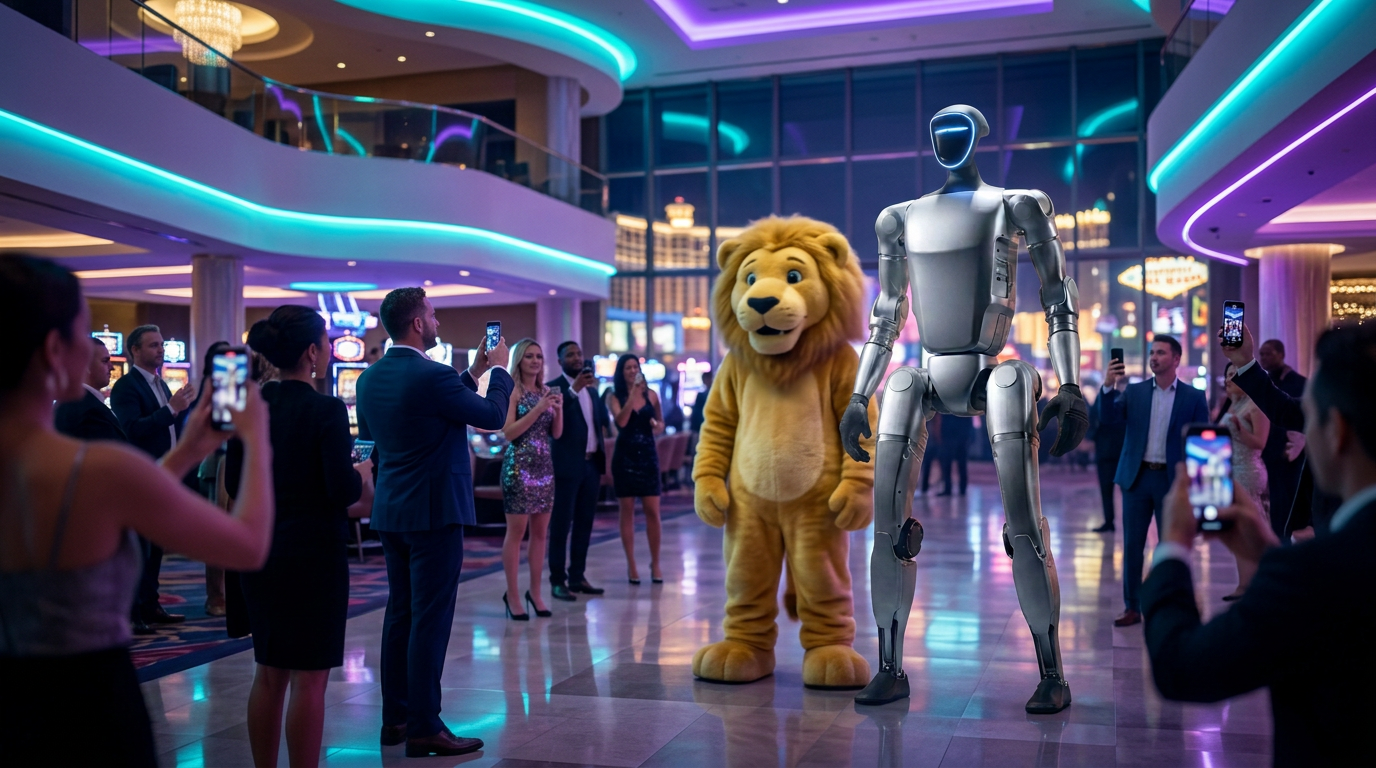
Choosing between a humanoid robot vs a costumed character for your Las Vegas event comes down to what you want guests to feel and remember. Both can draw a crowd, but they work very differently. This guide compares them on the things planners actually care about: attention, flexibility, logistics and brand fit.
Neither is always the right answer. The goal is to help you pick the one that suits your room, your audience and your budget conversation.
The core difference
A costumed character is a person in a suit. The charm comes from familiarity: guests already know the character, and the performer can hug, dance and ad-lib. A humanoid robot is a machine that walks, waves and gestures. The charm comes from surprise: most guests have never stood next to a walking robot, and they want to film it.
Novelty and shareability
Las Vegas guests see mascots, showgirls and impersonators every day. A walking humanoid robot still stops people mid-step. That novelty turns into photos and short videos, which is exactly what a brand activation, launch or trade-show booth wants. Costumed characters are loved, but they rarely feel new.
Interaction and improvisation
This is where a costumed character wins. A performer can read a room, hug a child, lead a conga line and talk freely. A robot appearance is more choreographed: greetings, waves, poses and simple gestures, guided by a human operator. If your event needs freewheeling interaction, a performer is hard to beat. If you want a clear, repeatable photo moment, a robot delivers it consistently.
Brand fit and message
A costume says playful and familiar. A humanoid robot says innovative and forward-looking. Technology companies, startups, product launches, automotive and future-focused brands often find the robot matches their message naturally. Family events, themed parties and nostalgic brands may suit a character better. Ask which impression you want guests to leave with.
Endurance and comfort
A performer in a full costume gets hot and tired, so characters usually work in short shifts with breaks. A walking robot also isn't on all night, since battery and charging shape the schedule. In both cases the smart plan is timed appearances with downtime, not continuous presence. Planning around this keeps the experience fresh either way.
Logistics and venue access
A costumed performer arrives in a bag and needs a changing space. A humanoid robot needs a little more planning: a load-in route, a flat and clear floor, power for charging and a defined zone for guests. None of this is difficult, but share it with the venue early. Our guide to humanoid robot safety at events covers the planning side in detail.
Safety and crowd management
Both options need someone managing the crowd. A character handler protects the performer and keeps lines moving. A robot operator does the same and also keeps guests at a comfortable distance from a moving machine. A marked zone, a host who introduces the experience, and a clear route out all help in both cases.
Audience and age
Young children love characters they recognise, though some find a giant mascot frightening. A humanoid robot is usually more curious than scary, and teens and adults tend to be the most engaged. For mixed corporate crowds and adult guests, a robot often creates more conversation. For a kids' party built around a specific character, the costume is the obvious pick.
Can you use both?
Yes, and sometimes it works well. A robot can anchor a tech-themed arrival moment while performers handle the dance floor or the photo line. Keeping them in separate zones prevents competition for attention and keeps each one clear.
Questions to ask any provider
Whichever route you take, ask what the appearance includes, how long each session runs, who manages the guests, what the venue needs in advance and what happens if plans change on the day. Clear answers on these five points tell you far more than any promotional video, and they let you compare a robot and a costumed performer fairly, side by side, before you commit.
A quick way to decide
Define the goal: surprise and shareable content, or familiar warmth and improvisation.
Look at your audience: corporate and adult, or young children around a known character.
Check the brand message: innovation or nostalgia.
Confirm the venue: space, floors, power and access.
Plan appearance windows with breaks for either choice.
If innovation and shareable moments top your list, read our guide to robot rental in Las Vegas for what to prepare before booking. For booth ideas, see trade show robots in Las Vegas.
Frequently asked questions
Is a humanoid robot better than a costumed character?
Neither is better in every case. A robot offers novelty and a modern brand message, while a costumed character offers warmth, familiarity and free-form interaction. Match the choice to your audience and goal.
Does a robot need a human with it?
Yes. A human operator guides the robot, speaks to guests and keeps the crowd at a safe distance, much like a handler with a costumed performer.
Can a robot appear for the whole event?
Plan in timed appearances with charging breaks rather than all-night presence. We'll help build a schedule around your event.
Plan your Las Vegas appearance
Tell us the date, venue and goal, and we'll help you decide whether a humanoid robot fits. Request a booking through the Book a Bot form, or visit the contact page. You can also see all our services.