
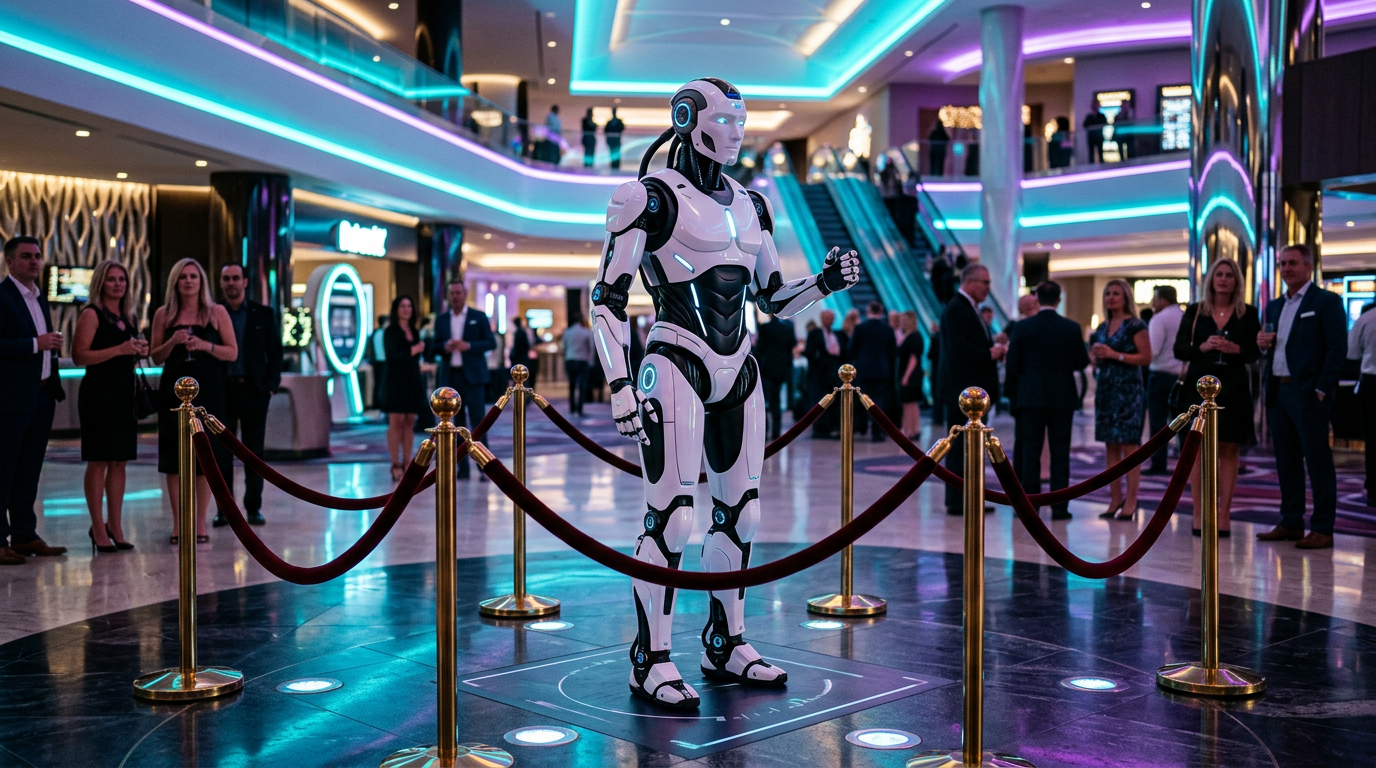
Humanoid robot safety at events is the first question any Las Vegas planner, venue manager or exhibitor should ask before booking one. A robot walking through a crowd of guests is exciting, but it only works when the people around it are protected and the venue is comfortable. This guide covers how a responsible humanoid robot appearance is planned, from floor surfaces to crowd flow.
It's written for event planners, trade-show exhibitors and venue teams who want the wow factor without surprises.
Why safety planning comes first
A humanoid robot is a machine with moving joints, a battery and a body that can fall if the floor or the crowd doesn't cooperate. That's not a reason to avoid one. It's a reason to plan like you would for any stage effect, lighting rig or vehicle display. Good planning is invisible to guests and obvious to the venue.
Start with a site walk-through
Before any appearance, the layout should be reviewed: where the robot enters, where it stands, where guests queue, and where the nearest exit is. Our earlier guide on how to capture a hotel layout before a humanoid robot deployment shows what to measure and photograph so the plan fits the real space.
Floors, thresholds and surfaces
Walking robots care about the ground. Plush casino carpet, polished marble, trade-show carpet tiles, stage edges, cable covers and ramps all behave differently. Flag loose cables, steps and wet areas in advance so the robot's route stays flat and dry. Where a surface is uncertain, the robot can stay in a fixed spot and let guests come to it.
Crowd flow and a clear interaction zone
Most robot appearances work best with a defined zone: a marked area, a rope line or a floor decal that tells guests where to stand. That keeps the robot from being bumped, keeps lines moving and keeps small children from running underneath it. In a busy convention hall, place the robot against a wall or booth edge rather than in a main aisle.
A trained operator is always present
A humanoid robot at an event shouldn't be left to roam alone. A human operator should stay within reach, watch the crowd, and be ready to pause the robot, sit it down or move it away. Guests should know who to ask if they have a question. A good operator also reads the room and ends an interaction when a crowd gets too tight.
Power, charging and downtime
Battery-powered robots need planned breaks. Build rest periods into the schedule, give the team a nearby outlet and a quiet spot, and use those breaks as natural pauses between appearances. Planning for downtime also means a low battery never becomes a surprise on the show floor.
Guest etiquette that keeps everyone comfortable
Simple signage and a quick verbal intro go a long way: wave, shake hands gently, don't pull on limbs, and keep a polite distance. Alcohol-heavy environments such as galas and pool parties deserve extra attention, so keep the interaction zone staffed and the robot away from drinks and spills.
Venue rules and approvals
Every Las Vegas venue has its own rules for vendors, entertainers and equipment, including load-in times, elevators, insurance requirements and security procedures. Ask the venue early, and share the robot's plan with their events or security team so nobody is surprised on the day. We're glad to coordinate with your venue contact directly.
Special considerations for trade shows and galas
Trade-show floors are loud, crowded and full of cables, so a robot works best at a booth edge with a clear apron of carpet in front. Galas bring formal clothing, long dresses and drinks, which means the interaction zone should be kept tidy and the route kept short. Both settings benefit from a staffed handler who greets guests and keeps the line moving. If you're planning a booth, our guide to trade show robots in Las Vegas covers traffic tips.
A simple pre-event safety checklist
Confirm the floor type and any steps or ramps. Mark the interaction zone. Assign a human operator and a backup contact. Schedule charging breaks. Brief venue security and the event lead. Place simple guest guidance signage. Walk the route once before doors open, then adjust for anything that looks tight. Ten minutes of checking on the day saves an hour of troubleshooting later.
What a safe appearance feels like to guests
Done well, guests never think about safety at all. They see a robot greet them, wave, pose for photos and entertain the line. Behind the scenes, the operator, the floor plan and the schedule do the work. That calm, confident experience is what turns a robot from a novelty into a highlight guests remember and share.
Frequently asked questions
Is a humanoid robot safe around guests and children?
With a defined interaction zone, a trained operator and sensible guest guidance, yes. Planning the space and supervising the interaction are what make it safe, just as with any stage effect or display.
Can a humanoid robot walk through a crowded room?
It can, but we usually recommend a marked route or a fixed spot. Open, flat paths with a spotter reduce the risk of bumps and keep guests moving.
What should I tell my venue before booking?
Share the date, the space, how long the robot will appear, and where it will stand or walk. Tell them an operator will be present. Then let us handle the details with their events team.
Plan a safe, memorable robot appearance
Explore our humanoid robot services to see the kinds of events we support, then contact us with your date and venue, or call (702) 582-9358. We'll help you plan an appearance that wows guests and keeps your team at ease.