Las Vegas Events · 4 min read
How Reliable Are Rental Robots?
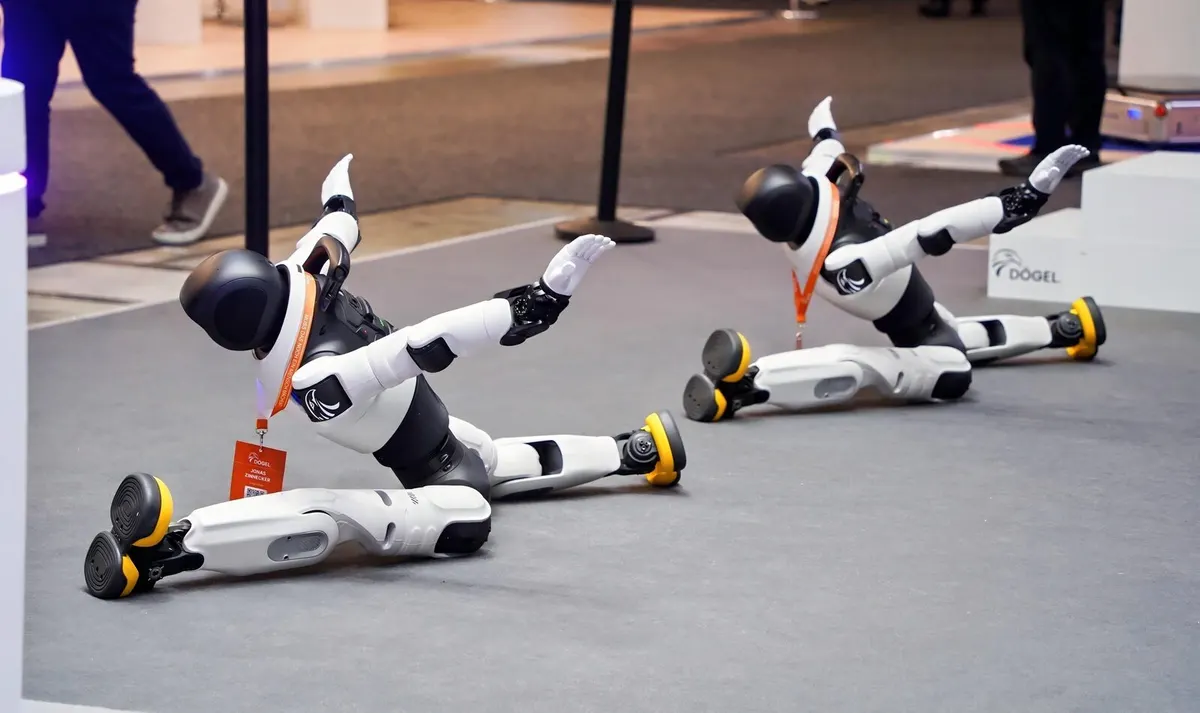
There's no meaningful uptime percentage. Reliability is a property of the whole setup: the machine, the environment, the plan, and the people running it. I run Humanoid Vegas, a Las Vegas B2B humanoid robot rental company, and every booking includes trained operators who read the floor in real time. Reliability isn't a promise; it's a process.
It's the question every smart event planner asks before booking, and it's the question most rental companies answer with a glossy number. I'll give you something better: the truth about what reliability actually depends on, from someone who puts robots on live floors for a living.
Here's what makes a rental robot reliable or unreliable at a real event, and what I do about each factor.
Reliability Is a Plan, Not a Spec
Here's the core thing most people get wrong: they treat reliability like it's a property of the robot. It isn't. Reliability is a property of the whole setup: the machine, the environment, the plan, and the people running it. A great robot with a bad plan will have a bad day. A good robot with a great plan will run all show long.
The hardware matters, of course. I run a professional-grade humanoid, a serious machine, not a toy, and I maintain it like the professional equipment it is. But the hardware is only one part of the equation. The rest is everything around it, and that's where most reliability problems are actually born.
What Actually Affects Reliability
Let me walk through the real factors, because once you see them, you'll know how to evaluate any rental company.
The environment. Trade show floors are chaotic: uneven carpet, cables everywhere, crowds that surge unpredictably, lighting that changes by the hour. A robot's reliability drops the moment the environment stops being controlled. This is why I scout the venue or walk it with you beforehand: the floor plan determines where the robot works, where it rests, and where the crowd flows. Planning the space is planning the reliability.
The task. A robot doing a rehearsed, repeatable routine in a defined area is about as reliable as event technology gets. A robot asked to improvise in an undefined space is not. Reliability goes up when the task is designed around what the machine does well. That's a planning conversation we have before your event, not something we figure out on show day.
Handling. Who touches the robot matters enormously. Robots that get handled by trained operators stay in show condition. Robots that get handled by whoever's nearby don't. This is the single biggest reason my bookings always include trained operators: the people running the machine are the difference between a smooth day and a rough one.
Power and runtime. Every robot has a battery, and batteries are honest: they run out. Reliability means the power plan is built into the show schedule: planned breaks, charging windows, rotation if the day is long. There's nothing dramatic about it. It's logistics, and it gets handled in advance.
The crowd. This one surprises people. At a busy event, the biggest reliability risk isn't the robot: it's the audience. Excited attendees crowd in, someone bumps the machine, someone tries to grab it. Crowd management is part of the operator's job, and it's part of why "just drop off the robot" is never how I work.
How Trained Operators Change the Equation
An operator isn't just a driver. My operators are the reliability system. They read the floor in real time, crowd density, floor conditions, the robot's state, and make the small adjustments that keep a performance smooth: repositioning before a bottleneck forms, pausing a routine when the aisle surges, giving the machine a rest before it needs one instead of after.
Most "reliability incidents" at events aren't failures at all. They're moments where something unplanned happened and nobody was there to handle it gracefully. An operator turns those moments into invisible non-events. The crowd never knows. The show never stops. That's what you're actually paying for when a rental includes professional operators, not just someone to press buttons, but someone whose whole job is keeping your day boring in the best possible way.
How to Vet Any Rental Company's Reliability
Since I won't give you a percentage, here's what to ask instead, of me or anyone else:
• Do bookings include trained operators on site, or is the robot dropped off?
• How do you plan for the specific venue: do you walk the floor or review the layout?
• What's the power and break schedule for a full show day?
• What happens if something goes wrong mid-event: who handles it, and how fast?
• Can you describe a time something went sideways and how you handled it?
The answers to those five questions will tell you more about reliability than any stat on a brochure. A company that answers them concretely has a real operation. A company that dodges them has a marketing department.
Reliability isn't a promise. It's a process: planning, operators, and honest preparation. That's how I run every booking, and it's why my clients' show days stay smooth.
Ready to plan a reliable event? Book a Bot and we'll walk through your venue and your show day together.