
What Can a Rental Robot Actually Do?
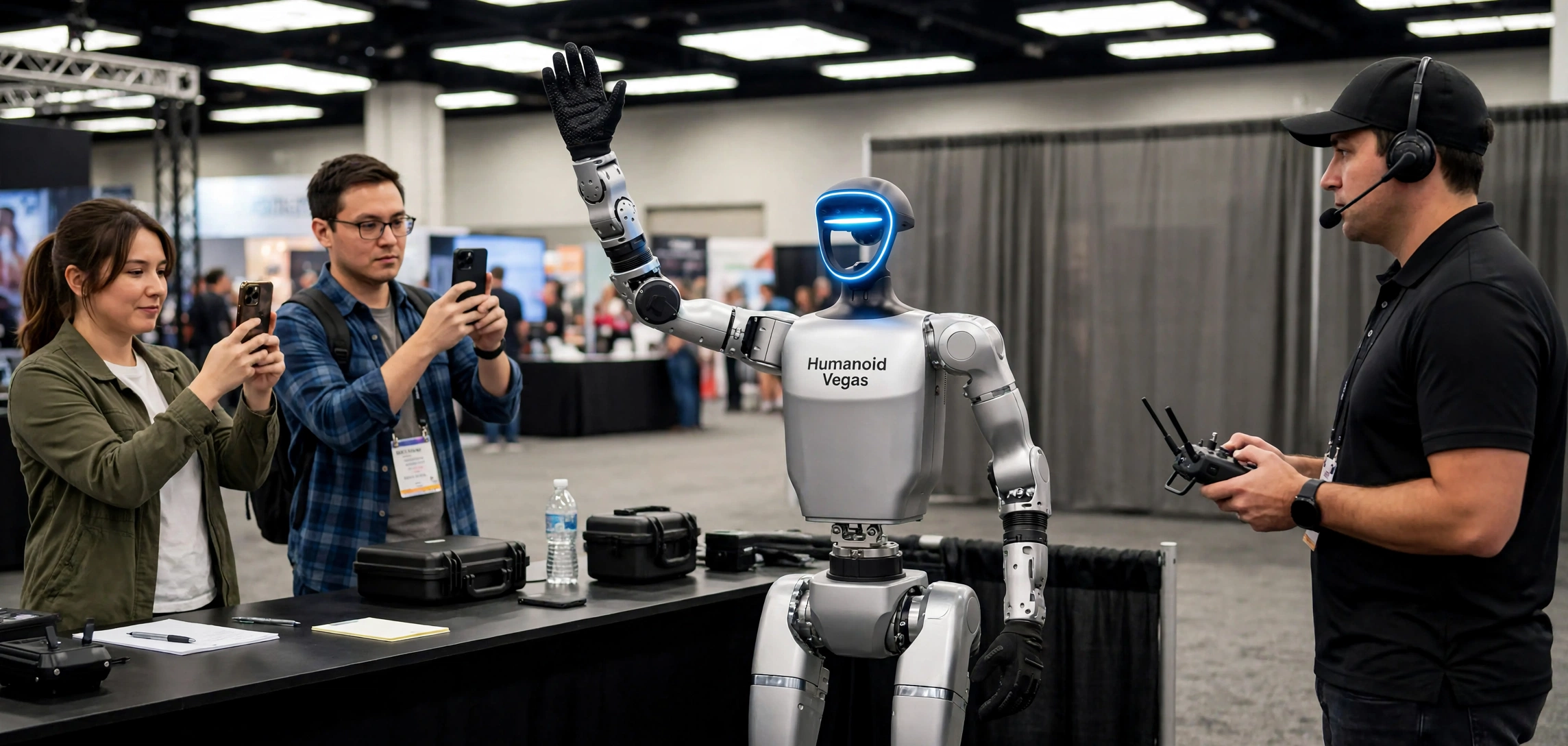
A rental humanoid performs choreographed routines, greetings, gestures, dance-style sequences, crowd engagement, and photo moments, all run live by trained operators. I run Humanoid Vegas, a Las Vegas B2B humanoid robot rental company, and the fleet is the Unitree G1 EDU. It doesn't converse freely, do physical work, or run autonomously, it's a professional engagement platform.
This is the question that matters most, and it's the one the industry answers least honestly. You'll see videos of robots doing backflips and assume that's what shows up at your event. It isn't, and that's fine, because what actually shows up is better suited to your event anyway. Let me give you the straight version: what a rental humanoid does, what it doesn't, and why the distinction matters for your booking.
What the Robot Does Well
A modern humanoid like the Unitree G1, the robot in the Humanoid Vegas fleet, is an impressive piece of hardware. Here's what it genuinely does in a rental context:
Movement and presence. It walks, gestures, waves, poses, and moves through a space with the kind of fluid motion that stops people in their tracks. This is the core capability, and it's the one your event actually needs. A humanoid moving naturally in front of your booth is the crowd magnet; everything else is built on top of it.
Choreographed routines. With trained operators running the show, which is how every Humanoid Vegas booking works, the robot performs programmed routines: greetings, dance-style sequences, gestures timed to your presentation, interactive moments like high-fives or photo poses. The routines are rehearsed, reliable, and tailored to your event. This is where the craft lives. A good operator team turns capable hardware into a genuinely good show.
Crowd interaction. The robot can engage with attendees in structured ways, approaching, gesturing, reacting to cues from the operators. It's interactive enough to feel alive and personal, which is exactly why people pull out their phones. That shareable moment is the whole point of a brand activation, and the robot delivers it consistently.
Adaptability across venues. The same robot works a trade show booth, a keynote stage, a product launch, a reception. The hardware doesn't change; the programming and staging do. That flexibility is one of the real strengths of renting, you get the right show for each setting without owning hardware for each one.
What It Doesn't Do (The Honest Limits)
Now the part some companies won't tell you. A rental humanoid is not autonomous, not conversational, and not a general-purpose helper. Let's be specific:
It doesn't think or converse. The robot isn't having unscripted conversations with your attendees. It doesn't understand questions, explain your product, or improvise dialogue. The personality your audience experiences comes from the operators and the programming, not from onboard intelligence. Anyone promising a robot that chats freely with your customers is describing a lab demo, not an event-ready rental.
It doesn't do physical work. It's not carrying things, assembling products, serving drinks, or performing manual tasks at your booth. It's an engagement and entertainment platform, not a labor replacement. If someone is pitching you a rental robot as booth staff that does jobs, be skeptical.
It has real physical constraints. Battery life is finite, performances run in sets, not continuously all day. It needs a reasonably clear, level area to move safely. Extreme heat, rain, uneven ground, and crowded chaos are all genuine constraints that we plan around. This isn't fragility; it's physics. A good operator plans the show around these limits so your audience never notices them.
It needs operators. This is the one I want to be clearest about, because it's also our model: every Humanoid Vegas booking includes trained operators, and there's a reason for that. Running a humanoid well, safe, smooth, on-cue, is a skilled job. The robot without operators is impressive hardware sitting still. The robot with operators is a show. Don't rent from anyone who hands you the robot and wishes you luck.
How to Judge What You're Getting
Because the industry ranges from honest operators to hype merchants, here's how to evaluate any rental offering:
Ask who runs it. If the answer is "you do" or it's vague, walk away. Professional rentals come with professional operators. Full stop.
Ask what's programmed for your event. A real operator can describe the routines, the customization process, and how the show fits your venue. Vague promises of "the robot will interact with your guests" without specifics are a red flag.
Ask about the limits. An honest company will tell you about battery windows, space requirements, and what the robot can't do, the way this post does. A company that claims the robot can do everything is telling you about their marketing department, not their fleet.
Watch real footage. Ask for video from actual events, not manufacturer sizzle reels. There's a big difference between what a robot does in a lab with perfect conditions and what it does on a trade show floor at 4 PM. The honest operators show you the real thing.
The right expectation is this: a rental humanoid is a professional crowd-engagement platform run by trained people. It's spectacular at what it does, stopping traffic, creating moments, making your brand the thing people remember. It's not a science fiction android. Set the expectation correctly and you'll be delighted. Set it from a viral video and you'll be disappointed by reality, which is nobody's fault but the hype's.
I'd rather you book with clear eyes. That's what this post is for.
Want to see what the real thing looks like at your event? Book a Bot for your next event and get the robot, the operators, and an honest show: Book a Bot.