
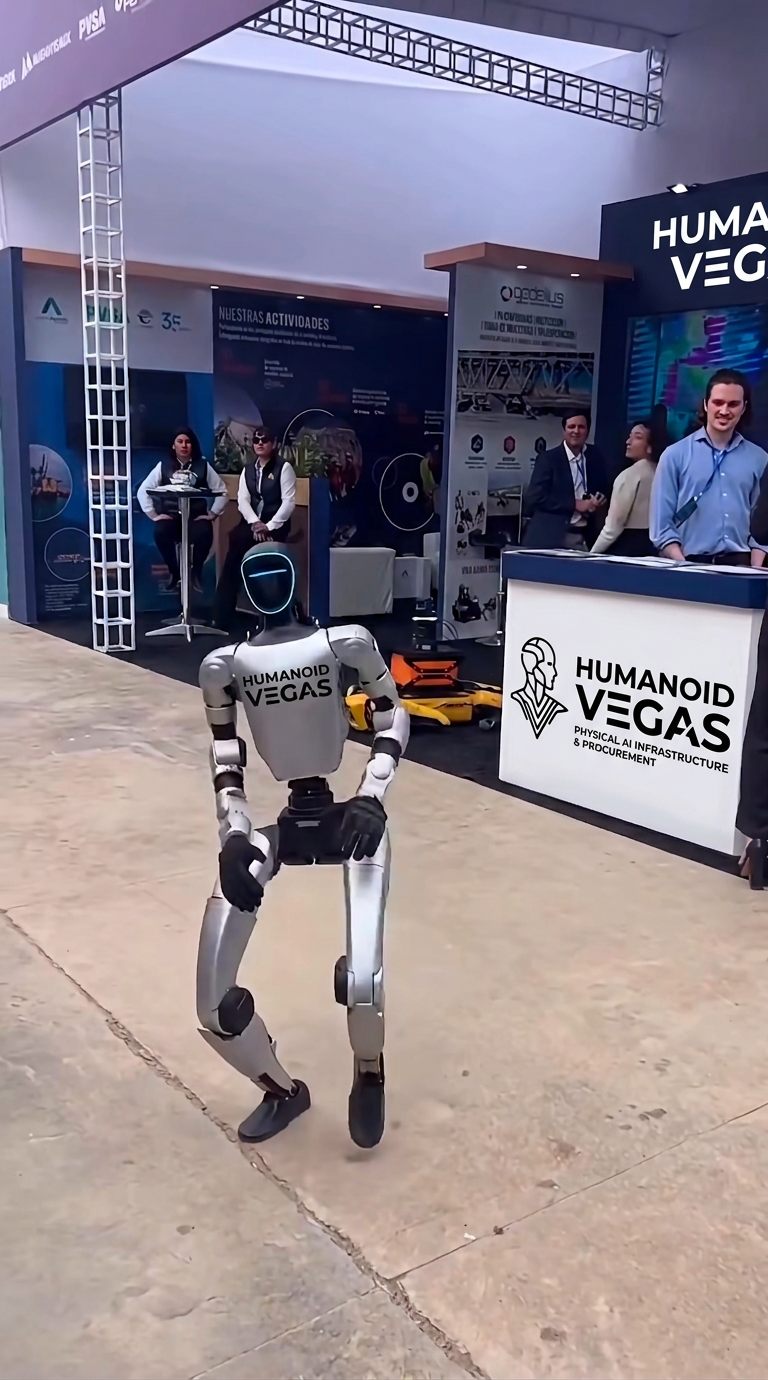
Book at least a month ahead, and several months ahead for peak convention weeks like CES. I run Humanoid Vegas, a Las Vegas B2B humanoid robot rental company, and every booking includes trained operators, that planning time is what makes the show sharp. The robot is the Unitree G1 EDU. Shorter timelines can work, but expect less customization.
Let me walk you through how I think about lead time, because the answer isn't the same for a small brand activation and a major trade show.
The Standard Guidance: Weeks, Not Days
For most events, reaching out several weeks ahead is the right move. That's not because booking a robot is complicated, it's because a good booking involves real planning. When you book a robot with Humanoid Vegas, you're not just reserving hardware. Every booking includes trained operators, and the performance gets programmed and tailored to your event. That takes coordination: understanding your venue, your schedule, your brand, and what you want the robot to do.
With a few weeks of lead time, we can do this properly. We can walk through your floor plan, talk through the routines that make sense for your audience, sort out logistics like power and staging space, and arrive at your event fully prepared. Rush a booking into a few days' window and we lose most of that preparation, the robot still shows up, but the show isn't as sharp. Nobody wants a generic performance at their event.
As a rule of thumb: if you can give me a month or more, do it. If you're inside of two weeks, reach out anyway, but be prepared for a conversation about what's realistically possible on a tight timeline.
Peak Season: CES and the Las Vegas Trade Show Calendar
Las Vegas has a rhythm, and robot demand follows it. The city runs on its convention calendar, and there are weeks when every venue, every crew, and every vendor on the Strip is booked solid. The biggest of these is CES in early January, the single most competitive week of the year for Las Vegas events. NAB in April, major trade shows in the fall, these are the windows where lead time matters most.
Here's the practical reality: during peak weeks, everything gets harder. Venues tighten up. Freelance crews vanish into other shows. Logistics across the city get congested. A robot booking made months ahead of CES is a smooth, well-planned engagement. A booking attempted weeks before CES is competing with every other last-minute request in the city.
I'm not going to quote you availability statistics, I won't invent numbers about how often late bookings fail. But the principle is straightforward and it applies to every vendor in Las Vegas, not just robots: peak season rewards the planners. If your event falls on one of the big convention weeks, book early. Months, not weeks. The sooner we lock in dates, the more of the calendar we control, and the better the result.
For off-peak weeks, you've got more room to maneuver. But "off-peak in Vegas" is still Vegas: this is a city that hosts massive events year-round. Early beats late no matter the month.
What a Shorter Timeline Actually Looks Like
Sometimes you don't have a month. An event date moves, a sponsor request comes in late, or someone on your team just discovered that robot rentals exist. It happens, and it's worth being honest about what short lead time means.
First, reach out immediately. A shorter timeline means every day matters, and the first step is a quick conversation about your dates, your venue, and what you need. I'll tell you straight whether it's doable. If the calendar is open and your event is straightforward, shorter lead times can absolutely work.
But go in with realistic expectations. Less prep time means less customization. The choreography and routines may be closer to our proven set rather than built around your brand from scratch. Venue planning gets compressed. And if your event needs specific capabilities, something beyond what a standard engagement covers, a tight timeline may not leave room for it.
None of this is a hard no. It's just the difference between a performance we spent weeks tailoring and one we put together in days. Both are professional. One is sharper. When you can choose, choose the sharper one.
The Honest Bottom Line
Book early when you can, because planning time turns into performance quality. Protect yourself during peak season, if your event is anywhere near CES or another major convention week, months of lead time isn't conservative, it's sensible. And if you're on a short timeline, don't assume it's impossible; just reach out now and get a straight answer.
The worst outcome is the one that's entirely avoidable: deciding a month out that you want a robot and assuming a week will be enough to put together something great. It might work out. But you're gambling on availability and leaving quality on the table. Give the booking the time it deserves, and you get the show your event deserves.
Got dates in mind? Don't sit on them, Book a Bot for your next event and let's get your timeline locked in.